
Exploring Product launch funnel examples brings us into the fascinating world of marketing strategies that can make or break a product’s entry into the market. It’s not just about having a great product; it’s about how you present it to your audience and guide them through their buying journey.
This guide will take you through the essential components of a product launch funnel, showcasing successful examples from various industries while diving into effective strategies that can help enhance your marketing approach. By understanding these funnels, you can significantly increase your product’s visibility and potential success.
Product Launch Funnel Overview
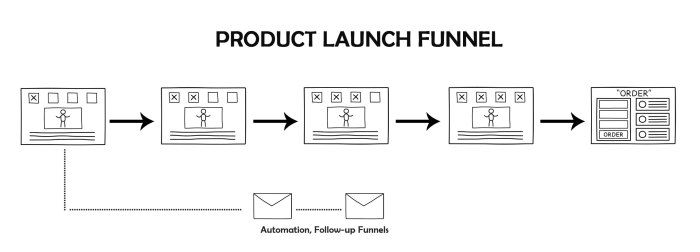
The product launch funnel is a marketing strategy designed to guide potential customers through various stages of awareness, interest, and action towards a product. It serves as a structured approach to optimize the process of introducing new products to the market, ensuring that each interaction with the target audience is strategically aligned to convert interest into sales. A successful product launch funnel is crucial for the growth and sustainability of a business, as it helps in building anticipation, educating potential customers, and ultimately driving sales.
Companies across various industries, from tech startups to consumer goods, have successfully implemented product launch funnels to reap significant rewards. For instance, the launch of the Apple iPhone in 2007 showcased a well-structured funnel that created immense anticipation and engagement prior to the product release.
Key Stages of a Product Launch Funnel
Understanding the key stages of a product launch funnel is essential to design an effective marketing strategy. Each stage plays a pivotal role in nurturing leads and transforming them into loyal customers. Below are the primary stages typically involved in a product launch funnel:
1. Awareness
This initial stage focuses on generating buzz about the upcoming product. Marketers utilize various channels such as social media, email marketing, and PR campaigns to inform the target audience about the product’s existence.
2. Interest
At this stage, the goal is to pique the interest of potential customers through engaging content. This could include blog posts, videos, and webinars that highlight the product’s features and benefits.
3. Consideration
Here, potential customers are evaluating the product against their needs and preferences. Providing product demos, reviews, and comparison guides can help in influencing their purchasing decision.
4. Intent
In this stage, prospects demonstrate a willingness to purchase, often by adding the product to their cart or signing up for a pre-order. Marketers can encourage this action through limited-time offers or exclusive deals.
5. Purchase
This is the final stage where the transaction occurs. Ensuring a smooth and seamless checkout process is critical to convert leads into paying customers.
6. Post-Purchase
After the purchase, it is essential to maintain engagement with customers through follow-up emails, surveys, or loyalty programs. This stage helps in building brand loyalty and encourages repeat purchases.Each of these stages serves a distinct purpose, contributing to the overall success of the product launch. By understanding and optimizing these stages, marketers can effectively guide customers through the funnel, increasing the likelihood of successful conversions.
“A successful product launch funnel is not just about selling a product, but about creating an experience that resonates with your audience.”
Strategies for Building a Product Launch Funnel
Building a strong product launch funnel is crucial for maximizing visibility and engagement when introducing a new product to the market. This process involves several key strategies that can significantly enhance the effectiveness of your launch efforts. Here, we’ll delve into effective methods for constructing a robust funnel that will attract and convert your target audience.
Effective Methods for Building a Product Launch Funnel
To ensure the success of your product launch funnel, consider implementing the following strategies. Each method plays a critical role in nurturing leads and guiding them towards making a purchase.
- Define Your Target Audience: Clearly identify who your ideal customers are. Understand their needs, preferences, and pain points to tailor your messaging effectively.
- Create High-Quality Content: Develop valuable content that resonates with your target audience. This can include blog posts, videos, infographics, and webinars that educate and inform.
- Leverage Social Media: Utilize various social media platforms to build anticipation for your product. Regular updates and engaging content can create buzz and drive traffic to your funnel.
- Use Paid Advertising: Invest in targeted ads that reach potential customers. Platforms like Facebook, Instagram, and Google Ads can help increase visibility and attract qualified leads.
- Implement Retargeting Strategies: Use retargeting ads to reach users who have shown interest but have not converted. This keeps your product top-of-mind and encourages them to return.
Link Popularity and Its Impact on Visibility
Link popularity refers to the number and quality of backlinks pointing to your product page or website. This factor significantly impacts your product’s visibility during its launch phase.
- Build Quality Backlinks: Focus on obtaining backlinks from reputable sources within your industry. This enhances authority and boosts search engine rankings.
- Engage in Guest Blogging: Writing guest posts on popular blogs can help you reach a broader audience while building links back to your product page.
- Utilize Influencer Marketing: Collaborating with influencers can increase your link popularity. When influencers share your product with their followers, it can lead to more backlinks and increased traffic.
- Participate in Online Communities: Engaging in forums and online groups related to your industry can help you share valuable insights while linking back to your product page.
“The more high-quality links you have, the more authoritative your product will appear to search engines, improving overall visibility during the launch.”
Importance of List Building in Email Marketing
List building is a fundamental tactic for successful product launches, primarily through email marketing. An engaged email list allows for direct communication with potential customers and can significantly drive conversions.
- Create Lead Magnets: Offer valuable freebies, such as eBooks or exclusive discounts, to encourage visitors to subscribe to your email list.
- Segment Your List: Divide your email list into specific groups based on interests and behaviors. This allows for more personalized and relevant messaging.
- Automate Email Campaigns: Use automation to send timely and relevant emails throughout the launch process, nurturing leads and keeping them informed.
- Leverage Pre-launch and Post-launch Sequences: Develop email sequences that build excitement before the launch and follow up afterward, encouraging feedback and reviews.
“Email marketing remains one of the most cost-effective ways to reach your audience and can lead to significantly higher conversion rates during a product launch.”
Utilizing Various Marketing Channels in Product Launches
In today’s competitive market, leveraging diverse marketing channels is essential for the success of product launches. Each channel offers unique advantages, and utilizing a mix can enhance visibility, engagement, and customer acquisition. This section explores various marketing strategies that can be employed for effective product promotion, ensuring that your product reaches the right audience at the right time.
Role of Paid Surveys in Gathering Customer Insights
Paid surveys serve as a valuable tool in the pre-launch phase, offering insights into consumer preferences and expectations. They enable businesses to collect data directly from potential customers, helping to shape product features, pricing strategies, and marketing messages. By incentivizing participation, companies can gather substantial feedback that informs their launch strategy.
-
Consumer feedback is crucial for aligning product characteristics with market desires.
- Surveys can uncover potential challenges or barriers that may not have been previously considered.
- Responses can help in segmenting target audiences for personalized marketing strategies.
Podcasting as a Tool for Product Promotion
Podcasting has emerged as a powerful medium for product promotion, allowing brands to connect with audiences on a personal level. Through informative content and storytelling, businesses can create a narrative around their product, fostering interest and anticipation.
- Building a loyal audience through regular episodes enhances brand trust and authority.
- Interviews with industry experts can provide additional credibility to the product.
- Podcasts can be easily shared, expanding reach through word-of-mouth and social media.
Advantages of PPC Advertising
Pay-Per-Click (PPC) advertising plays a critical role in driving targeted traffic to product landing pages. By focusing on specific s and demographics, businesses can ensure that their ads are shown to users who are most likely to convert.
- PPC campaigns allow for immediate visibility on search engines.
- Detailed analytics provide insights into campaign performance, enabling quick adjustments.
- Budget control means businesses can allocate funds effectively based on return on investment (ROI).
Benefits of PPC Publishing for Maximizing Outreach
PPC publishing expands a brand’s outreach by promoting content across various platforms. This strategy is particularly effective during launches, as it increases brand exposure and drives traffic to the product page.
- Utilizing retargeting ads helps to re-engage visitors who showed interest but did not convert.
- It allows for precise targeting, reaching users based on their online behavior.
- PPC publishing can complement organic traffic strategies, creating a well-rounded marketing approach.
Process of Product Creation and Alignment with Launch Strategies
Product creation should be a strategic process aligned with overall launch goals. This includes ideation, design, development, and testing phases that are carefully coordinated to meet market demands.
- Begin with thorough market research to identify gaps and opportunities.
- Develop prototypes based on feedback and iterate through testing phases.
- Ensure alignment with launch strategies to create a cohesive marketing message.
Steps Involved in Effective Product Launching
Launching a product effectively requires careful planning and execution. Each step should encompass aspects that ensure market readiness, from pre-launch buzz to post-launch follow-up.
- Create a launch timeline that Artikels critical milestones and deadlines.
- Develop a comprehensive marketing plan that includes multiple channels for promotion.
- Implement a feedback mechanism post-launch to gather insights for future improvements.
Final Summary
In conclusion, the insights gained from examining Product launch funnel examples illustrate the importance of a well-structured approach to marketing. By implementing the strategies discussed, you can effectively engage your target audience and maximize the impact of your product launches. Remember, a great product deserves a great launch!
FAQ Section
What is a product launch funnel?
A product launch funnel is a marketing model that guides potential customers through a series of steps, from awareness to purchase, optimizing their journey to enhance conversion rates.
How can I measure the effectiveness of my launch funnel?
You can measure the effectiveness by tracking key performance indicators (KPIs) such as conversion rates, customer engagement, and overall sales during and after the launch.
What role does email marketing play in a product launch funnel?
Email marketing is crucial in nurturing leads, providing them with valuable information about the product, and encouraging them to make a purchase through targeted campaigns.
Can I use social media in my product launch funnel?
Absolutely! Social media is a powerful channel for creating buzz, engaging with potential customers, and driving traffic to your product landing pages.
What is the importance of customer feedback before launching a product?
Gathering customer feedback before a launch helps identify potential issues, understand customer needs better, and refine your marketing strategies to ensure a more successful product introduction.


